Imagine walking into a store where you can try on a hundred outfits without stepping into a fitting room, see how a new couch looks in your living room without moving an inch, or test a makeup shade without touching your face. Sounds like a futuristic dream? Well, welcome to the reality—Augmented Reality (AR) in e-commerce is making all of this possible, and it’s transforming the way people shop online.
For years, the biggest challenge of online shopping has been the lack of physical interaction. Customers hesitate before clicking the “Buy Now” button because they’re unsure if the product will meet their expectations. Will that dress fit perfectly? Will that watch match my style? Will that piece of furniture fit into my living space? These uncertainties lead to high cart abandonment rates and, even worse, product returns.
But here’s the good news: Augmented Reality (AR) in e-commerce is bridging the gap between the virtual and physical shopping experience. It’s not just a fancy tech trend—it’s a game-changer for startups, entrepreneurs, and software developers looking to revolutionize online shopping. In this blog post, we’ll explore how AR is enhancing customer experience, why it matters, and how businesses can implement it effectively.
Understanding Augmented Reality in E-Commerce
What is Augmented Reality (AR)?
Augmented Reality (AR) is a technology that overlays digital content—such as images, sounds, and interactive elements—onto the real world. Unlike Virtual Reality (VR), which creates a fully immersive digital environment, AR enhances the real world by adding virtual elements to it.

In the e-commerce landscape, AR helps customers interact with products virtually before making a purchase. This makes online shopping more engaging, informative, and, most importantly, confidence-boosting.
Why is Augmented Reality Important for E-Commerce?
E-commerce has long relied on product descriptions, photos, and videos to persuade customers. However, these traditional methods come with inherent limitations. Augmented Reality (AR) introduces a revolutionary way to engage customers, offering a more interactive and immersive shopping experience. This technology allows customers to experience products in a way that was once impossible, helping them make more informed purchase decisions. Here’s why AR is crucial for the future of e-commerce:

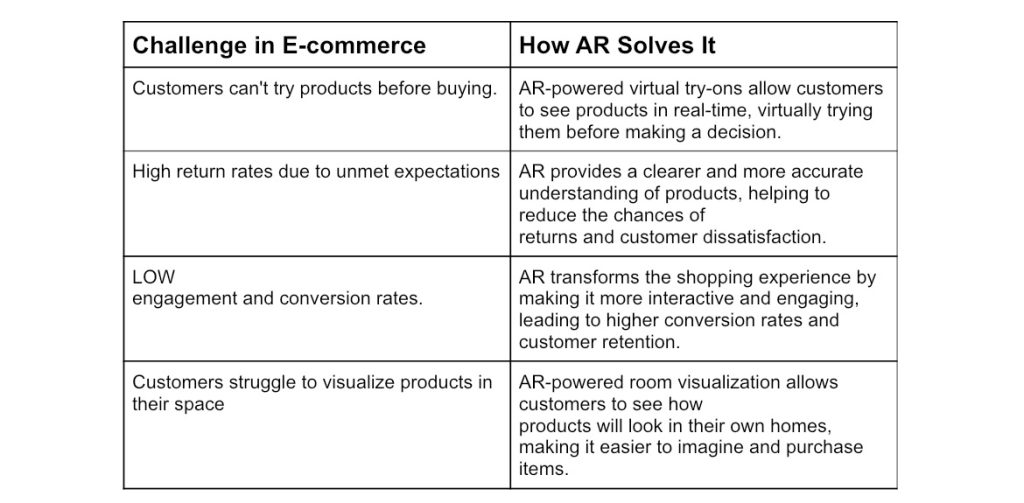
With AR, e-commerce stores are able to bridge the gap between online shopping and the experience of seeing products in person, creating a seamless and enjoyable experience for customers.
The Role of AR in Enhancing Customer Experience

Customer experience is a crucial factor that drives the success of any e-commerce business. The more seamless, engaging, and personalized the shopping experience, the greater the chances of fostering customer satisfaction and loyalty. Augmented Reality (AR) is playing a transformative role in enhancing the customer experience in e-commerce, allowing businesses to offer innovative and immersive shopping journeys. AR is not just about adding a layer of technology to the experience; it’s about reshaping how customers interact with products and helping them make better purchasing decisions. Here are some of the key ways AR is changing the customer experience:
1. Virtual Try-Ons: The Dressing Room of the Future
How often have you ordered a product online, only to be disappointed when it doesn’t match your expectations? AR-powered virtual try-ons are changing this by allowing customers to experience products virtually before making a purchase. Brands like Nike, Warby Parker, and Sephora have implemented AR try-on features that allow users to visualize how items, such as shoes, glasses, or makeup, would look on them. With AR, the fitting room is no longer limited to physical stores. Customers can now try products at their convenience, creating a more personalized and accurate shopping experience. This technology helps to reduce the guesswork, increasing the chances of a satisfied customer.
2. AR-Powered Product Visualization: See Before You Buy
When shopping for furniture or home décor online, one of the biggest challenges customers face is imagining how a piece will fit into their space. AR-powered product visualization addresses this issue by allowing customers to view 3D models of products in their actual environment. Companies like IKEA and Wayfair have been at the forefront of this shift, letting users place virtual furniture in their homes through their mobile apps. This eliminates the uncertainty that comes with online furniture shopping and gives customers the confidence to make informed decisions. By bringing products to life in a real-world context, AR makes the online shopping experience feel more tangible and authentic.
3. Interactive 3D Product Displays: Beyond Static Images
Traditional product images on e-commerce websites can only provide so much information. While photos are helpful, they often lack the interactive element that helps customers explore a product fully. AR-powered 3D product displays, however, allow customers to rotate, zoom in, and examine items from every angle—just as they would in a physical store. For example, Apple’s website allows customers to explore the iPhone in 3D and interact with various design features before making a purchasing decision. This level of interactivity enhances the customer experience, making it more engaging and informative. By giving shoppers a virtual “hands-on” experience, AR increases confidence and reduces uncertainty.
4. AR Shopping Assistants: A Personal Touch in a Digital World
In a world dominated by online shopping, it’s easy to feel disconnected. Wouldn’t it be amazing to have a personal shopping assistant at your fingertips whenever you needed help? With AR shopping assistants, that dream is becoming a reality. AI-powered AR assistants are being integrated into the shopping experience by both luxury brands and major e-commerce platforms. These virtual assistants guide customers through their shopping journey, offering personalized product suggestions, answering questions, and even helping with size and style recommendations. By adding a personal touch to the shopping process, AR shopping assistants enhance customer experience, build trust, and foster brand loyalty. Additionally, this technology can drive higher sales by offering tailored recommendations based on a shopper’s preferences.
5. Gamification in E-Commerce: Making Shopping Fun
Who says online shopping has to be a mundane task? With AR, e-commerce brands are adding an element of fun and excitement to the experience through gamification. Companies like Zara and Adidas have leveraged AR to create treasure hunts, virtual challenges, and interactive shopping games that engage customers in new and creative ways. By incorporating gaming elements into the shopping journey, these brands increase customer interaction, boost brand engagement, and make the shopping process feel more like a rewarding adventure. Gamification helps create a deeper connection with customers, encouraging them to return for future purchases, share their experiences, and become advocates for the brand.
The Business Benefits of Implementing AR in E-Commerce

- Higher Conversion Rates
When customers engage with AR-powered product experiences, their confidence in the product increases. This is particularly important in online shopping, where customers cannot physically touch or interact with items before purchasing. By visualizing how a product looks in their environment or how it fits them, shoppers are more likely to make a purchase. AR technology allows for a more interactive and realistic experience, helping customers feel assured that the item will meet their expectations, leading to a higher likelihood of completing the transaction. Studies have shown that when shoppers engage with AR, conversion rates can significantly improve compared to those who only view static images or videos of products. - Reduced Return Rates
A major challenge in e-commerce is the high rate of returns, often due to discrepancies between the product the customer expected and the one they received. AR technology helps solve this issue by providing a more accurate and interactive preview of the product before purchase. For example, customers can see how furniture fits into their living room or how clothing looks on their virtual self. By providing customers with a more precise and realistic idea of what they are buying, AR reduces the chances of dissatisfaction upon receiving the product. As a result, businesses experience fewer returns, saving them time and money on logistics, and improving customer satisfaction. - Increased Customer Engagement
AR creates a dynamic shopping experience that captures the attention of users for longer periods. By providing interactive features such as trying on clothes virtually, visualizing products in 3D, or experiencing product demonstrations, customers spend more time engaging with the brand. This increased engagement is not just beneficial for immediate sales but also builds long-term brand loyalty. As customers become more accustomed to the convenience and entertainment that AR offers, they are likely to return for future purchases. Engaged customers are also more inclined to recommend the brand to others, further promoting repeat business and expanding the customer base. - Competitive Advantage
Augmented Reality is still a relatively novel concept in the e-commerce industry, which means that businesses that adopt AR early can distinguish themselves from competitors. This early adoption positions a company as a leader in technological innovation and can attract more tech-savvy customers who are eager to explore new shopping experiences. Furthermore, standing out with AR not only offers a competitive edge in the market but also sets the business up as a pioneer in customer experience, allowing it to build a strong reputation among consumers and within the industry. - Better Data Insights
One of the key advantages of implementing AR in e-commerce is the ability to gather valuable data about customer behavior. By analyzing how customers interact with AR features—such as how long they engage with a product, which products they try on most often, or which visual features attract their attention—businesses can gain insights into customer preferences and decision-making processes. These insights can then be used to refine marketing strategies, personalize customer experiences, and optimize product offerings. Additionally, AR analytics can help identify patterns in customer behavior that businesses might otherwise overlook, enabling smarter, data-driven decision-making.
Challenges and Considerations When Implementing AR in E-Commerce

While the potential benefits of AR in e-commerce are clear, businesses must also be aware of the challenges that come with its implementation. Below are some of the key obstacles and solutions to consider:
- High Development Costs
Developing AR features can be a significant investment for businesses, especially for small or mid-sized companies. The cost of building high-quality AR experiences may initially seem prohibitive. However, companies can start by integrating third-party AR solutions or platforms that offer out-of-the-box tools. This approach allows businesses to test the waters and gauge the effectiveness of AR in driving sales before committing to expensive custom solutions. Over time, once the benefits of AR are clear, companies can scale up and invest in more tailored, advanced AR technologies. - Device Compatibility Issues
One of the challenges of AR is ensuring that it works seamlessly across a variety of devices, including smartphones, tablets, and desktop computers. Different devices have different capabilities in terms of hardware and software, and not all browsers are optimized for AR experiences. To address this, businesses need to ensure that their AR features are compatible across multiple devices and operating systems. Conducting thorough testing on various devices and browsers is essential to provide a smooth and consistent user experience, minimizing the chances of technical issues that could frustrate customers. - Need for High-Speed Internet
Augmented Reality experiences often require substantial processing power and bandwidth, which means that users may need access to high-speed internet for optimal performance. Slow internet connections can lead to lag, poor rendering, and frustration for the user, which could deter them from completing a purchase. To address this issue, businesses can optimize their AR experiences by compressing data, reducing file sizes, and ensuring that AR features load quickly. Additionally, businesses can offer an offline or low-bandwidth option for users with slower internet connections, ensuring that everyone can enjoy the experience regardless of their connection speed. - User Education and Adoption
While AR has grown in popularity, not all users are familiar with how it works or comfortable using it in the context of shopping. For businesses to fully leverage the benefits of AR, they must educate their customers on how to interact with AR features. This can be done through tutorials, onboarding guides, and in-app demonstrations that walk users through the process of using AR to visualize products. Clear communication about the value of the AR experience and its ease of use will help drive adoption, ensuring that customers feel confident and excited to use the technology. Encouraging positive experiences and offering incentives, such as discounts or rewards, for using AR can further promote user engagement.
How to Implement AR in Your E-Commerce Business
- Choose the Right AR Technology
The first step in implementing AR in your e-commerce business is selecting the right AR technology based on your specific needs and the platforms you intend to use. There are several AR software development kits (SDKs) available to help integrate augmented reality into your website or mobile app, including:- Apple’s ARKit: A powerful SDK designed for building AR applications on iOS devices, ARKit allows developers to create immersive experiences on iPhones and iPads. If your business caters to iOS users, ARKit is a great choice for building engaging and high-performance AR features.
- Google’s ARCore: ARCore is a comprehensive SDK that works for Android devices, allowing you to build AR applications for a wide range of smartphones and tablets. It’s an ideal solution for businesses targeting Android users and looking to implement advanced AR features.
- WebAR: For businesses looking to reach users across various devices without requiring them to download an app, WebAR offers browser-based AR experiences. WebAR works directly within web browsers, such as Chrome or Safari, and does not require specific operating systems or device downloads, making it a more accessible option for many users.
Choosing the right AR technology is crucial, as it ensures that your AR features are compatible with your target audience’s devices and offers the necessary tools to create a seamless experience.
- Develop AR-Enabled Features
Once you’ve selected your AR technology, you’ll need to decide what type of AR experience best suits your products and brand. Different types of AR features can enhance various kinds of products and shopping experiences:- Virtual Try-Ons for Fashion and Beauty: If your business sells clothing, accessories, or cosmetics, implementing virtual try-on experiences can be a game-changer. This allows customers to “try on” products virtually before purchasing, helping them make better decisions and increasing the likelihood of a sale. For example, beauty brands can use AR to let users see how makeup looks on their face, while fashion retailers can offer virtual fitting rooms for clothes and accessories.
- 3D Product Visualization for Furniture and Electronics: For businesses in industries like furniture or electronics, AR-powered 3D product visualization is invaluable. Customers can place products in their own space (such as furniture in their living room) to visualize how they’ll fit and look in real life. This type of AR experience helps overcome the limitations of online shopping by giving consumers a more accurate sense of the product.
- AR-Powered Shopping Assistants: AR-powered shopping assistants can provide a personalized, interactive shopping experience. Using AR, customers can receive product recommendations, view additional product information, or navigate through a virtual store. This type of personalized assistance can enhance the shopping experience, increase engagement, and drive sales.
By selecting the right AR feature, you’ll ensure that the experience matches your customers’ expectations and product offerings, ultimately enhancing their shopping journey.

- Optimize for Mobile and Web
Since a large majority of online shoppers use mobile devices to make purchases, it’s crucial to ensure that your AR features are optimized for mobile platforms. Mobile optimization means ensuring that AR experiences are easy to navigate on smartphones and tablets, loading quickly and smoothly for an enjoyable user experience. If your e-commerce business includes a website, make sure that the AR functionality works across both mobile and desktop versions of the site.
Additionally, it’s essential to consider the limitations of mobile devices. For instance, ensure that AR features are lightweight, so they don’t require excessive processing power or slow down the user’s device. Test across different models and operating systems to ensure consistent performance, and consider implementing responsive designs that adapt the experience to the device being used. A seamless, mobile-friendly AR experience will encourage users to engage with your brand on the go. - Promote Your AR Features
Once you’ve integrated AR technology into your e-commerce business, it’s time to promote it effectively to your customers. Simply having AR features is not enough—you need to make sure your audience knows how to use them and why they should. Here are some effective strategies to promote your AR-powered shopping experience:- Engaging Content: Create engaging, informative content that highlights the benefits of using AR in your store. This could include blog posts, social media content, or video tutorials that show customers how to use AR features in a fun and easy-to-understand way.
- Tutorials and Guides: Offering step-by-step tutorials or in-app guides can help users understand how to use AR features. Consider implementing interactive guides or pop-up tips within your app or website to help users get started.
- Influencer Marketing: Partner with influencers or brand ambassadors to showcase your AR features to a wider audience. Influencers can create engaging content that demonstrates the unique benefits of your AR experiences, attracting their followers and encouraging them to explore your e-commerce site.
- Promotions and Incentives: Encourage customers to use AR features by offering promotions or incentives. You could provide discounts, exclusive offers, or reward points for users who interact with AR-powered experiences. This not only drives engagement but also boosts conversions by creating a sense of excitement around your new technology.
Effective promotion ensures that your customers are aware of the AR features available to them, encouraging greater adoption and enhancing the overall shopping experience.
Conclusion
Augmented Reality (AR) in e-commerce is no longer just a futuristic concept—it’s transforming the online shopping experience today. By enhancing the customer journey with interactive try-ons, 3D product displays, and immersive experiences, AR is boosting customer confidence, reducing returns, and driving sales.
For businesses—whether startups, entrepreneurs, or developers—this is the perfect moment to embrace AR and stay ahead of the competition. Whether you’re building a new e-commerce platform or integrating AR features into an existing store, the potential is limitless. AR not only creates unique and engaging shopping experiences but also fosters long-term customer loyalty and satisfaction.
Integrating AR into your e-commerce strategy offers immediate benefits, such as increased conversion rates and lower return rates, while positioning your brand as an innovator in the marketplace. It’s a tool that goes beyond traditional online shopping, offering deeper connections with customers and enhancing their experience.
So, are you ready to transform online shopping with Augmented Reality? The future of e-commerce is here, and businesses adopting AR today will shape the future of retail. Don’t get left behind—seize the opportunity to elevate your business and take your e-commerce experience to the next level.